The occurrence of toxic algae and algal toxins causes problems for the Norwegian seafood industry because of health risks for consumers. Thus, research on algal blooms, the profiles and prevalence of the different toxins is needed for the improvement of risk management.
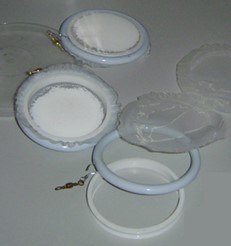
In this project, we have developed new technology for the large-scale harvest of algae and algal toxins by pumping seawater through plankton nets and columns with adsorbent materials. Furthermore, we have explored methods to study enzymatic biotransformation of algal toxins into their respective metabolites, including toxicity testing of the produced metabolites in in vitro assays. Clean-up methods for toxins from algal cultures, seawater, shellfish and crude extracts of metabolised toxins were optimised, resulting in fewer sample preparation steps and less and more environmental-friendly solvent use.
The molecule structures of purified algal toxins were elucidated by fragmentation spectrum analysis in liquid-chromatography tandem mass spectrometry (LC-MS/MS) and nuclear magnetic resonance (NMR). The purified toxins are now applicable as standards in the chemical analysis of shellfish extracts in monitoring programmes. By increasing the availability of standards, new chemical methods can be developed and validated more rapidly.
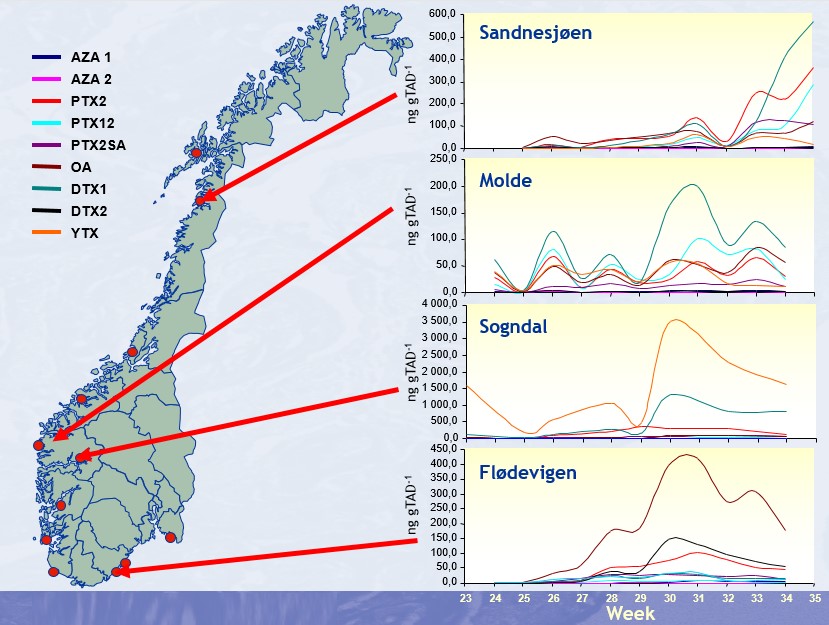
The project activities have contributed to a substantial decrease of use of the mouse bioassay test, which was previously the standard method for proving the presence of algal toxins in shellfish. By providing algal toxin standards for toxicity testing, the project was early in initiating the transition to alternative New Approach Technologies (NAMs), which replace old animal-based techniques in-line with the 3R principles (Replace, Reduce, Refine).
The project has increased collaboration between Norwegian research institutions working on algal toxins, and has also contributed to the EU-funded “BIOTOX” project.
References:
Rundberget, T.; Gustad, E.; Samdal, I. A.; Sandvik, M.; Miles, C. O. A convenient and cost-effective method for monitoring marine algal toxins with passive samplers. Toxicon 2009, 53 (5), 543-550.